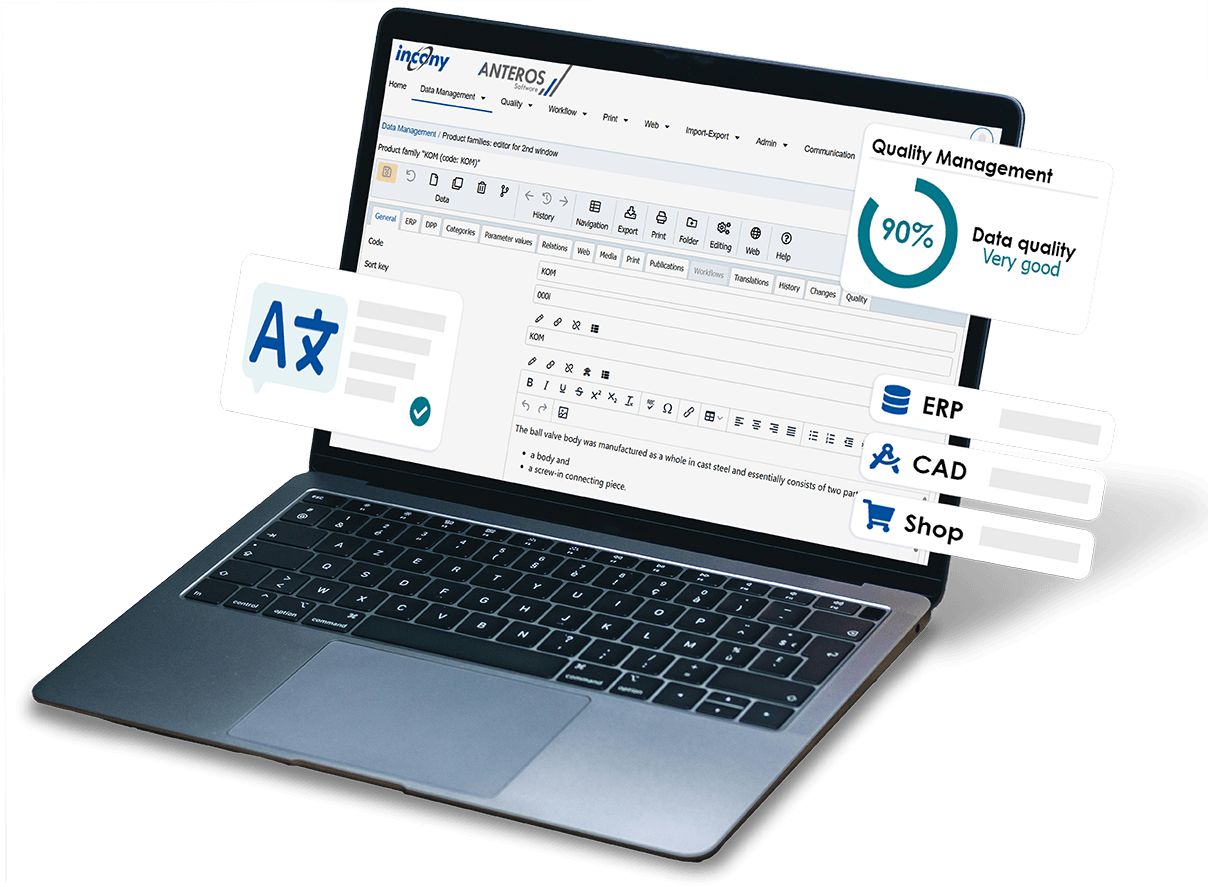
ANTEROS: Integrated PIM & Cross-Media Solutions for Professional Product Data Management
Use your product data as a dependable knowledge foundation: From seamless data exports and modern web apps to the fully automated creation of catalogs, price lists, and datasheets.
Explore what matters to you: Centralize product data Streamline processes Automate print publishing Distribute data
Typical Use Cases with ANTEROS
ANTEROS modules support you in the following four classic use cases, among other, from centralized data maintenance to distribution to your channels.
Centralize Product Data
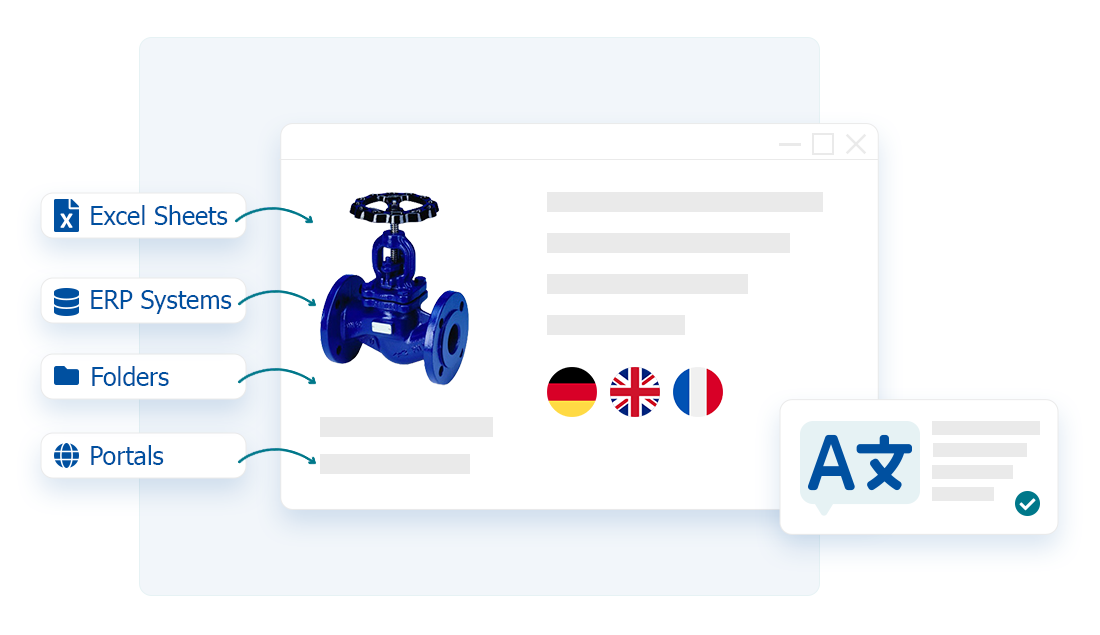
Product data, images, and documents are often scattered across Excel spreadsheets, ERP systems, and disparate folders. ANTEROS brings all this data together in one central place—ready to manage, validate, and leverage across all downstream workflows.
Seamless Data & System Integration: Connect ERPs, online shops, and third-party sources via API and automate real-time data imports. ANTEROS.imex & .rest →
Maintain Product Data: Manage, enrich, and prepare consolidated data for diverse target channels. ANTEROS.pim →
Manage Digital Assets: Organize product-related and standalone images, documents, and videos directly alongside your product data. ANTEROS.mam →
Translate Content: Manage all language versions and region-specific product assortments in a single system. ANTEROS.tm →
Streamline Processes
Product data maintenance often involves tedious, recurring routines—updating descriptions, handling translations, and reviewing data accuracy. ANTEROS introduces intelligent automation to eliminate repetitive steps and cut down manual workload.
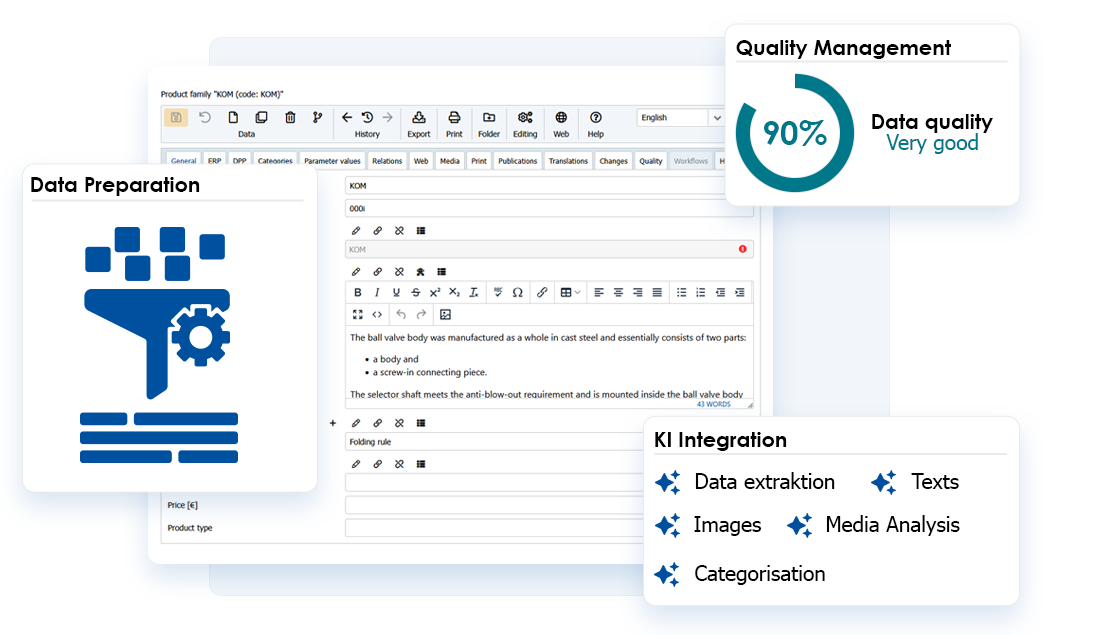
Prepare & Transform Data: Automatically format supplier data and tailor customer-facing feeds to the right specifications. ANTEROS.damex →
Validate Data Quality: Automated validation rules run in the background and flag data issues immediately. ANTEROS.qm →
Leverage AI Harness AI to support text generation, translation, and attribute extraction from unstructured data. ANTEROS.ai →
See ANTEROS in Action
Discover how ANTEROS simplifies your product data management—live, with no obligation, and tailored specifically to your needs.
Automate Print
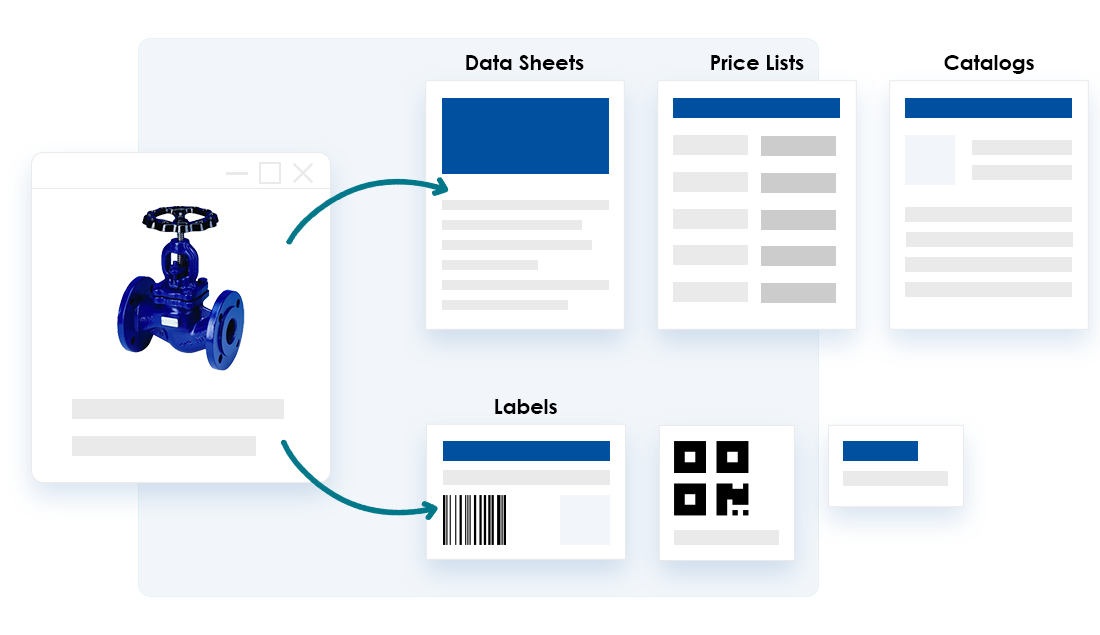
Compiling catalogs, price lists, and labels manually takes time and is prone to errors, especially with frequent product changes. ANTEROS generates these documents directly from your maintained product data.
Generate Documents: Automatically produce catalogs, price lists, and datasheets directly from your product data, including customer-specific versions. ANTEROS.print →
Design Labels: Create packaging, carton, and shelf labels automatically using the exact same data. ANTEROS.label →
Distribute Data
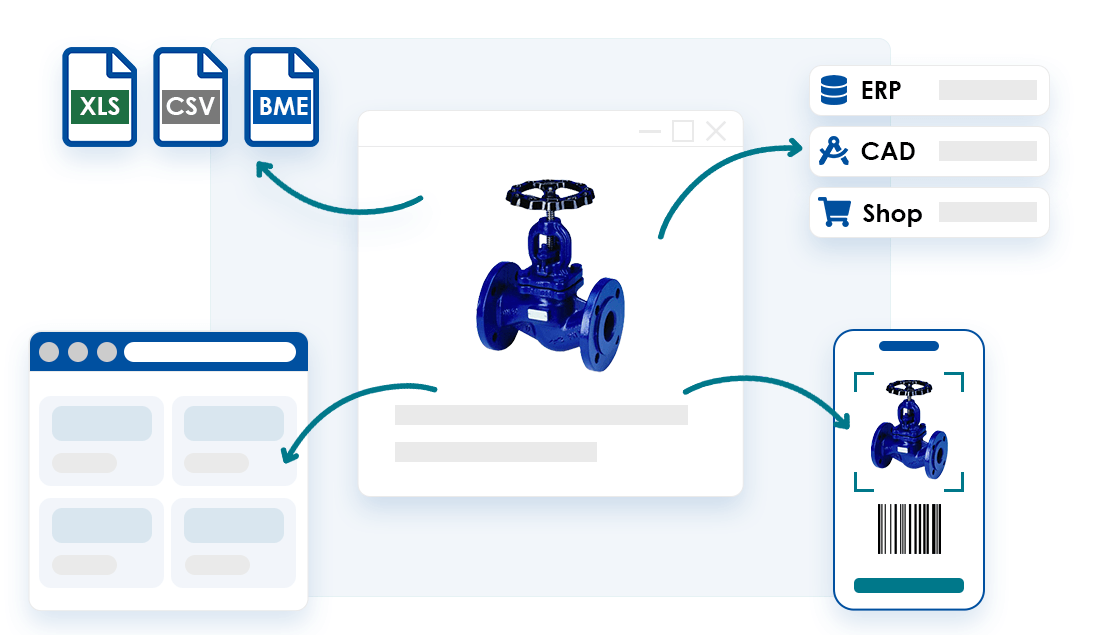
Customers, partners, and distributors expect product data in their own specific formats, whether for an online shop, an ERP system, or a trading platform. ANTEROS syndicates your data in the exact structure each receiving system requires.
Interfaces & Data Export: Connect external systems in real time via API and provide flexible data formats such as Excel, BMEcat, or TecDoc. ANTEROS.imex & .rest →
Run Shops & Portals: Deploy online shops, digital catalogs, or information portals for internal and external use. ANTEROS.web →
Mobile Access: Quickly locate the right product on mobile devices using barcode scanning and visual photo search. ANTEROS.app →
ANTEROS Compared to Other Systems
Unlike fragmented tool stacks, ANTEROS combines core product data management, translation workflows, digital asset management, automated print publishing, and B2B e-commerce into one seamless, unified solution.
How ANTEROS Grows with Your Needs
Do we need to implement the full ANTEROS suite, or can we start modularly?
ANTEROS is fully modular by design. You begin with only the capabilities you need to solve immediate pain points—for example, core data centralization (ANTEROS.pim) alongside digital asset management (ANTEROS.mam). Further solutions, like automated print publishing (ANTEROS.print) or customer portals (ANTEROS.web), integrate seamlessly down the road without disruptive system rebuilds.
Can we use ANTEROS if we already have a separate DAM/MAM or an existing e-commerce shop in place?
Yes. Our all-in-one approach is an option, not a mandate. If you already use an established digital asset management system or an existing online store (such as Shopware or Magento), ANTEROS integrates seamlessly with them via standardized APIs. You simply choose the modules missing from your current setup—such as core PIM data maintenance and our dynamic print engine.
Is ANTEROS available as a cloud solution (SaaS) or on-premises, and can we switch deployment models later?
ANTEROS adapts flexibly to your IT security and infrastructure requirements: You can run the system as a browser-based cloud solution (SaaS) hosted in certified German data centers, or host it conventionally on your own server infrastructure (on-premises). Switching between deployment models is straightforward, even later during ongoing operations.
What happens to our data and configurations if we add new modules later?
Every ANTEROS module operates natively on the same unified data foundation and core architecture. Starting with ANTEROS.pim and subsequently enabling ANTEROS.print or ANTEROS.web requires zero data migration and no complex inter-module middleware. Any newly activated module immediately inherits all previously maintained attributes, digital assets, and data relations.
How flexibly can permissions and access rights be managed across the various modules?
A centralized role and permissions system allows you to define with granular precision which departments or external partners can view and edit specific areas. For example, product managers can maintain data in the PIM, while translation agencies are restricted to the translation module (ANTEROS.tm) and graphic designers only have access to media assets (ANTEROS.mam).
Do extensions to the data model require custom programming?
No. The data model in ANTEROS can be configured purely through administrative settings at every level. Whether adding new product types, categories, feature sets, or mandatory fields: authorized users can create and maintain new data structures and validation rules directly in the system on their own.
How does the licensing model scale with team growth and catalog expansion?
With complete flexibility and zero user caps: Rather than charging per user, ANTEROS supports an unlimited number of concurrent users. Licensing scales transparently alongside chosen functional modules and system workload, allowing the solution to grow seamlessly alongside your assortments, target markets, and output channels.